Top Camping Lantern Buying Mistakes to Avoid for Your Outdoor Trip
You’re probably here because you’re planning an outdoor trip and want to make sure your camping lantern doesn’t turn into a dud. Good news: avoiding the most common lantern buying mistakes isn’t rocket science, and a little forethought can save you a lot of grief (and darkness) in the wilderness. The biggest pitfall? Underestimating your actual lighting needs and overestimating a lantern’s advertised capabilities. Let’s dig into how to sidestep those issues and more.
Misjudging Brightness and Coverage
One of the quickest ways to be disappointed with a new camping lantern Laldeen is to have unrealistic expectations about how much light it will actually put out and how far it will spread. Manufacturers often advertise peak lumen counts, but those numbers don’t always tell the whole story of practical illumination.
Forgetting the “Usable Light” Factor
When you see a lantern boasting 1000 lumens, it sounds impressive. But are those 1000 lumens useful for your specific situation? Often, a significant portion of a lantern’s output is focused in a way that creates a bright spot but leaves surrounding areas dim. Or, the light might be too harsh and create uncomfortable glare, especially in a small tent. Usable light means a comfortable, even spread that allows you to perform tasks, cook, or read without straining your eyes. It’s not just about the raw number; it’s about how that light is distributed and its quality. A higher lumen count doesn’t automatically mean better illumination for camping. Sometimes a lower lumen lantern with better diffusion will be more effective.
Overlooking Beam Pattern and Diffusion
Camping lanterns come with various beam patterns. Some are designed to throw light in a wide, even circle, ideal for illuminating a tent or picnic table. Others might be more directional, acting almost like a spotlight, which is less useful for general area lighting. Pay attention to descriptions that mention “360-degree illumination” or “diffused light.” This usually indicates a frosted globe or a similar mechanism designed to soften and spread the light evenly. A clear lens, while potentially brighter in a concentrated spot, can create harsh shadows and glare, which is precisely what you want to avoid when you’re trying to relax around camp. Consider where you’ll be using the lantern most. If it’s for inside a tent, you’ll want something that lights the entire space softly, not just a patch of it.
Not Matching Brightness to Activity
Think about what you’ll actually be doing with your lantern. Are you reading in your tent? Cooking dinner at a picnic table? Navigating a path to the outhouse? Each activity requires a different level of brightness. A super-bright lantern might be great for setting up camp in the dark, but it will be overkill and potentially annoying for playing cards inside a tent. Many modern lanterns offer multiple brightness settings, which is a huge plus. Look for models with a low setting (around 50-100 lumens) for ambient light, a medium setting (150-300 lumens) for general tasks, and a high setting (300+ lumens) for brighter situations or larger areas. Don’t just assume more lumens are always better; flexibility is key.
Underestimating Power Needs and Battery Life
A dead lantern is just a paperweight in the dark. Misjudging how long your lantern will last or how it will be recharged is a major pitfall that can leave you literally in the dark.
Ignoring Realistic Run Times
Manufacturers often list impressive “up to X hours” run times. However, these figures are almost always based on the absolute lowest brightness setting. When you crank that lantern up to a usable level, especially its highest setting, the battery life plummets dramatically. Always check the run time for various brightness levels, not just the maximum. If a lantern claims 100 hours, but that’s at 10 lumens, and you need 200 lumens for your typical use, you might only get 8-10 hours. Factor in how many nights you’ll be camping and how many hours you expect to use the lantern each night. It’s always better to have more run time than you anticipate needing.
Overlooking Battery Type and Availability
The type of battery a lantern uses is a critical, yet often overlooked, detail. Are they standard AA or D batteries? Is it a built-in rechargeable lithium-ion battery? Each has pros and cons. Standard batteries are easy to find, but you’ll need to carry spares, adding weight and requiring disposal. Rechargeable lanterns are convenient, but they need a power source (solar, USB, crank) to replenish. If you’re on a multi-day trip far from power outlets, a rechargeable lantern without a robust charging solution (like a large solar panel) might not be practical. Consider if you want to standardize battery types with your headlamps and other gear to simplify your packing.
Neglecting Recharging Options
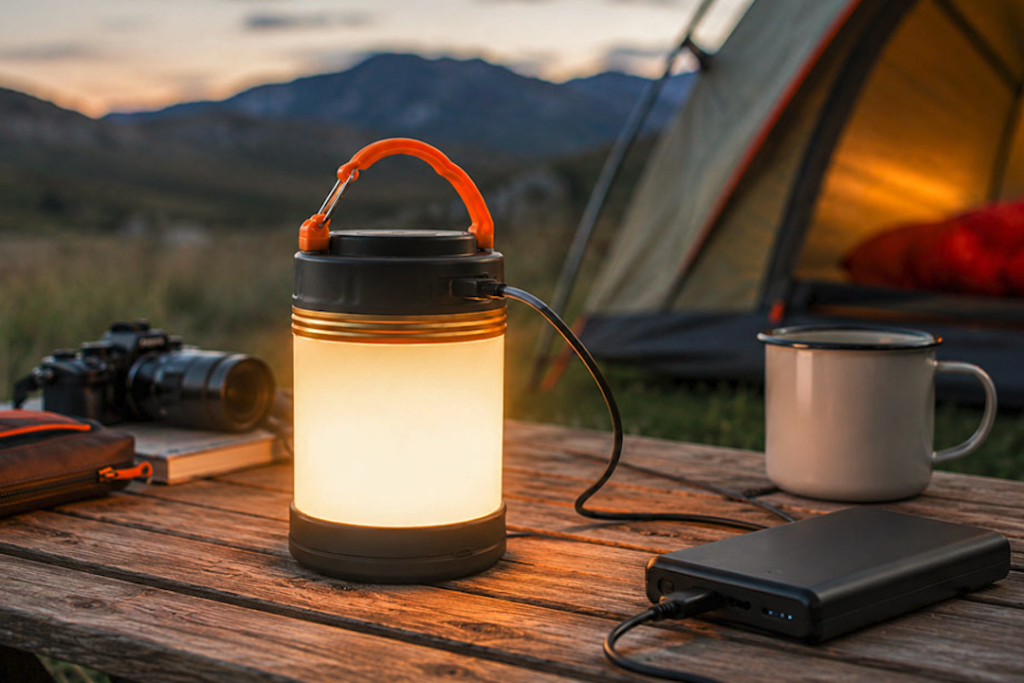
For rechargeable lanterns, how do you actually recharge it in the wild? Many modern lanterns feature USB charging, which is great if you have a power bank. Some have built-in solar panels, but these are often very small and only provide a trickle charge, best for topping off rather than a full recharge, especially if conditions aren’t perfectly sunny. Others might have hand cranks, which are reliable but can be tedious. If your trip involves off-grid camping, think about your power ecosystem. Do you have a large portable power station? Are you relying solely on the lantern’s built-in charging method? Make sure your recharging plan is as robust as your lantern’s battery life.
Skimping on Durability and Weather Resistance
The outdoors is tough, and your gear should be too. A flimsy lantern or one that can’t handle a little rain won’t last long, or worse, will fail when you need it most.
Dismissing IP Ratings
An IP (Ingress Protection) rating tells you how well a device is protected against solids (like dust) and liquids (like water). It’s usually expressed as “IPXY,” where X is the dust protection and Y is the water protection. For camping, you want a decent water resistance rating. IPX4 means it can handle splashes from any direction – good for a light drizzle. IPX7 means it can be submerged for a short period, which is excellent for accidental drops in puddles or heavy rain. Don’t just assume “water-resistant” means anything; look for the actual IP rating. A lantern without one or with a very low rating might be fine for fair-weather car camping, but for anything more adventurous, it’s a risk.
Overlooking Construction Materials
How a lantern is built matters. Cheap plastic can crack easily if dropped on a hard surface or when exposed to cold temperatures. Look for lanterns made from durable plastics (like ABS) or even metal components in critical areas. Consider the globe as well. A sturdy, frosted plastic globe is often more forgiving than a delicate glass one. Shake the lantern gently in the store if possible. Does it feel solid, or does it rattle? This can be an indicator of overall construction quality. A well-built lantern will withstand the bumps and scrapes that are inevitable in a wilderness setting.
Forgetting About Drop Resistance
Things get dropped, especially in the dark or when you’re fumbling with gloves on. While not all manufacturers list a specific drop rating, you can often infer durability from the construction. A compact, rubberized lantern is likely to handle a fall better than a tall, slender one with exposed components. If you’re particularly clumsy or know your adventures involve rough terrain, prioritize a lantern that looks and feels like it can take a hit. This often goes hand-in-hand with good construction materials and a thoughtful design that protects delicate parts.
Ignoring Portability and Convenience Features
A lantern can be bright and durable, but if it’s a pain to pack or use, it might stay at home. Convenience plays a huge role in how much you’ll actually enjoy using your gear.
Neglecting Size and Weight
Are you backpacking or car camping? This question dictates how critical size and weight are. For backpacking, every ounce and every inch matters. A bulky, heavy lantern might provide great light, but it could be left behind in favor of a headlamp if it’s too much of a burden. For car camping, you have more leeway, but even then, a compact lantern is easier to store and pack. Consider collapsible designs or those with integrated hangers that fold away neatly. Don’t get so caught up in lumens that you forget the practicalities of carrying the thing.
Underestimating Hanging and Carrying Options
A good lantern isn’t just a light source; it’s a versatile tool. Does it have a sturdy hook for hanging in your tent or from a tree branch? Is the hook large enough to fit over various objects? Some lanterns have magnetic bases, which can be incredibly useful for attaching to car hoods or metal tent poles. Others have comfortable handles for carrying. Think about how you’ll be using it. Will it sit on a table, or will you need to suspend it to get ambient light? The more hanging and carrying options, the more functional your lantern will be.
Overlooking User Interface and Simplicity
In the dark, possibly with cold hands, you don’t want to be fumbling with complex controls. A simple, intuitive user interface is paramount. Can you easily cycle through brightness settings? Is there a dedicated on/off button, or do you have to long-press? Are the buttons large enough to operate with gloves on? Some lanterns offer fancy features like color-changing LEDs or strobe modes, which can be fun, but ensure the core functionality is easy to access. A straightforward design reduces frustration when visibility is low.
Falling for Niche Features Over Core Functionality
Many lanterns come with extra bells and whistles. While some can be genuinely useful, others can distract from the basic purpose of a good camp light or add unnecessary cost and complexity.
Getting Distracted by Gimmicky Features
Does your lantern really need a built-in Bluetooth speaker? A bug zapper? While these features might sound cool, they often add bulk, weight, cost, and another point of failure. More importantly, they draw power, potentially reducing the run time of the core lighting function. Think critically about whether you’ll genuinely use a feature or if it’s just a novelty. Often, a dedicated bug zapper or a separate portable speaker will perform better than an integrated, compromised version in a lantern. Prioritize reliable light first.
Choosing “Too Much” Light for Your Needs
It’s easy to think “more lumens equals better,” but as discussed earlier, sometimes too much light is actually detrimental. A lantern that’s excessively bright for a small tent will be blinding and uncomfortable. You might end up using it only on its lowest setting, meaning you’ve paid extra for lumens you don’t use. Consider the average size of your camping group and tent. A solo backpacker in a small tent needs far less light than a family of five in a large cabin tent. Match the output to your actual anticipated usage.
Forgetting About Light Color Temperature
Light color, or color temperature, is often measured in Kelvins (K). Lower Kelvin numbers (around 2700K-3500K) produce a “warm” yellow light, which is cozy and easy on the eyes, often preferred for relaxing around camp. Higher Kelvin numbers (5000K-6500K) produce a “cool” white or bluish light, which is excellent for tasks that require concentration, like cooking or reading, as it mimics daylight. Some lanterns offer adjustable color temperatures, which is a fantastic feature. If not, consider what you prefer. A harsh, cool white light might feel clinical and less inviting, while a very warm light might make it harder to see true colors when preparing food. Don’t overlook this subtle but important aspect of a lantern’s performance.